


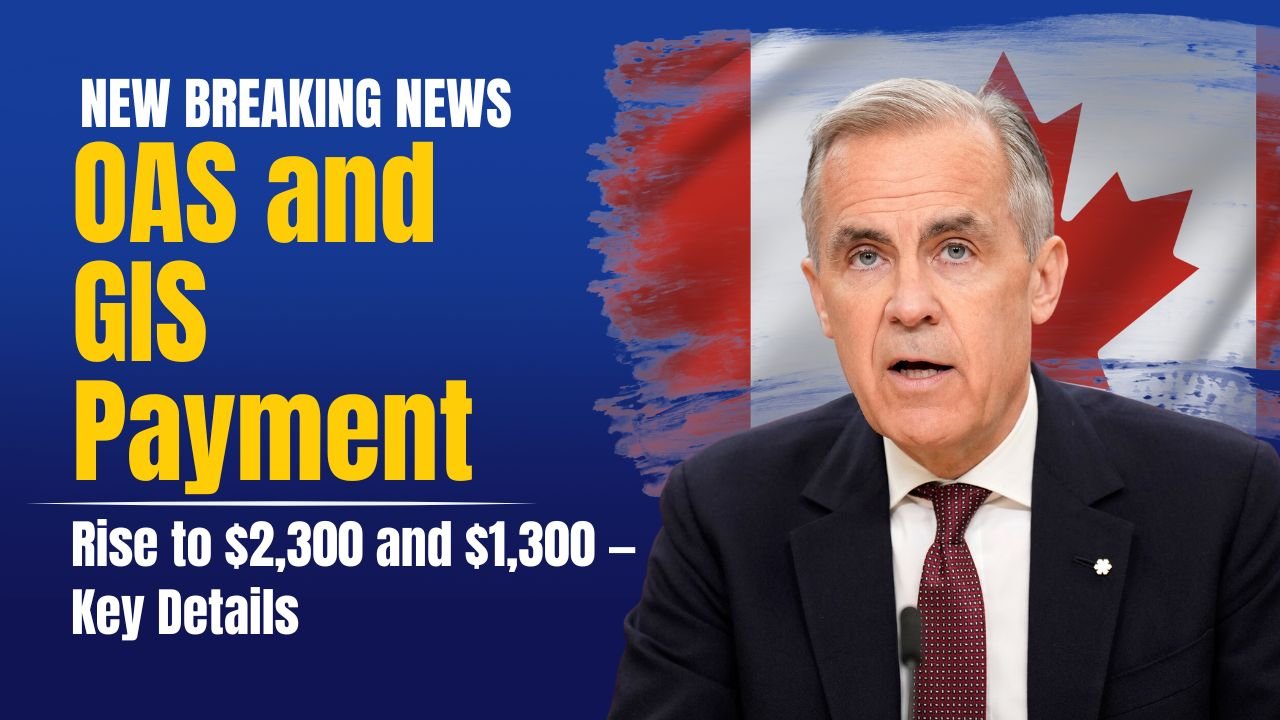
The Canadian government has announced a significant update for senior income benefits in November 2025, with the monthly Old Age Security (OAS) potentially reaching around $2,300, and the Guaranteed Income Supplement (GIS) topping out at approximately $1,300 for eligible low-income seniors.
These revised figures reflect the quarterly indexation tied to inflation and changes in income assessments from the previous tax year.
In this article, we explore how OAS and GIS work, the new amounts for November 2025, who qualifies, when payments arrive, and what you should do to ensure you receive the full amount you’re entitled to.
What is OAS and How Does It Work in 2025?
What OAS Provides
The Old Age Security (OAS) program is a foundational retirement income source for Canadians aged 65 and older. It is not based on employment history or past earnings. Instead, eligibility depends mainly on residency in Canada.
Maximum OAS Payment in November 2025
Starting November 2025, the full OAS benefit and any applicable additional benefits can lead to a monthly payment of about $2,300.
This figure assumes full eligibility and includes inflation indexation and additional small benefits for seniors.
OAS Eligibility Requirements
To receive the full OAS amount, seniors must:
- Be 65 years or older.
- Reside in Canada and have lived in the country for at least 40 years after turning 18.
- Newcomers may qualify for a partial OAS payment after at least 10 years of residency.
- File taxes annually.
- Stay below the income threshold that triggers the OAS Recovery Tax (for high-income seniors).
Understanding the GIS Increase for November 2025
What GIS Provides
GIS provides additional support to low-income seniors who already receive OAS. It is a means-tested supplement that helps seniors with limited income maintain a basic standard of living.
Maximum GIS in November 2025
For November 2025, qualifying seniors may receive up to $1,300 per month in GIS.
The actual amount depends on income, marital status, and overall household situation.
Who Qualifies for the Maximum Amount
The highest GIS payments typically go to:
- Single seniors with little or no income besides OAS.
- Low-income senior couples who both receive OAS.
- Seniors living alone with higher living costs.
GIS Eligibility Requirements
To access GIS, you must:
- Already receive OAS.
- Have a combined income below the GIS annual threshold.
- File taxes every year.
- Report changes in marital or residency status.
- Update income information if your situation changes.
How a Senior Can Reach the Combined $2,300 + $1,300 Payment
A single senior eligible for both full OAS and full GIS can receive a combined monthly income of around $3,600 (approx. $2,300 OAS + $1,300 GIS) under the November 2025 rates.
This amount can significantly help seniors manage rising living costs, especially those with little savings or additional income.
Key Factors That Affect Your Payment Amount
1. Income
Income from work, pensions, RRIFs, investments, or rentals affects GIS calculations. Higher income reduces GIS.
2. Marital Status
Payment levels change if you are:
- Single
- Married/common-law
- Have a partner who is not eligible for OAS
3. Age
Seniors aged 75+ receive a higher base rate of OAS.
4. Residency
Less than 40 years of Canadian residency after age 18 lowers OAS entitlement.
5. Tax Filing
Missing a tax return may delay or reduce OAS/GIS payments.
When Will These November 2025 Payments Arrive?
The November 2025 OAS and GIS payments are expected during the last week of November, which follows typical Canadian government pension schedules.
Direct deposit arrives faster, while mailed cheques take slightly longer.
This payment reflects the latest indexation and supports seniors facing rising everyday expenses.
How to Ensure You Get the Full Payment
- File taxes on time.
- Report income changes early.
- Update banking/address details.
- Review your Service Canada account regularly.
- Check if you qualify for the Allowance or Survivor Allowance (ages 60–64).
Why This 2025 Increase Matters
Seniors across Canada are facing higher costs for:
- Rent or property taxes
- Utilities
- Prescription drugs
- Food and transportation
- Home care and medical equipment
The OAS and GIS increases help offset inflation and maintain stability for seniors living on fixed incomes.
Canadians looking ahead to upcoming retirement income changes should pay close attention to the new benefit update known as $758 CPP Payment Scheduled for November 29, 2025 — What Canadians Should Know. This update highlights when eligible seniors will receive their enhanced monthly Canada Pension Plan support and what factors determine the exact payment amount. Understanding how the CPP increase works, who qualifies, and when deposits arrive can help retirees plan their budgets more confidently as they prepare for late-2025 financial needs.
Conclusion
The OAS and GIS enhancements for November 2025 provide meaningful financial support for Canada’s senior population. With OAS rising to about $2,300/month and GIS reaching $1,300/month, eligible seniors can better manage inflation, healthcare expenses, and day-to-day living costs.
To benefit fully, seniors must keep their taxes up to date, report income changes, verify residency, and ensure all personal information remains accurate. With proper management, these programs offer essential financial relief and greater peace of mind in retirement.
FAQs
Q1: What is the difference between OAS and GIS?
OAS is a monthly retirement benefit based on residency for Canadians aged 65+. GIS is an additional income-tested payment for low-income seniors already receiving OAS.
Q2: How are the November 2025 payment amounts determined?
They reflect quarterly inflation indexation and income assessments from the previous tax year, helping seniors keep pace with rising costs.
Q3: What should I do if my income changes during the year?
Report income, marital status, or residency changes promptly to Service Canada. A drop in income may increase GIS eligibility, while an increase may reduce it.