


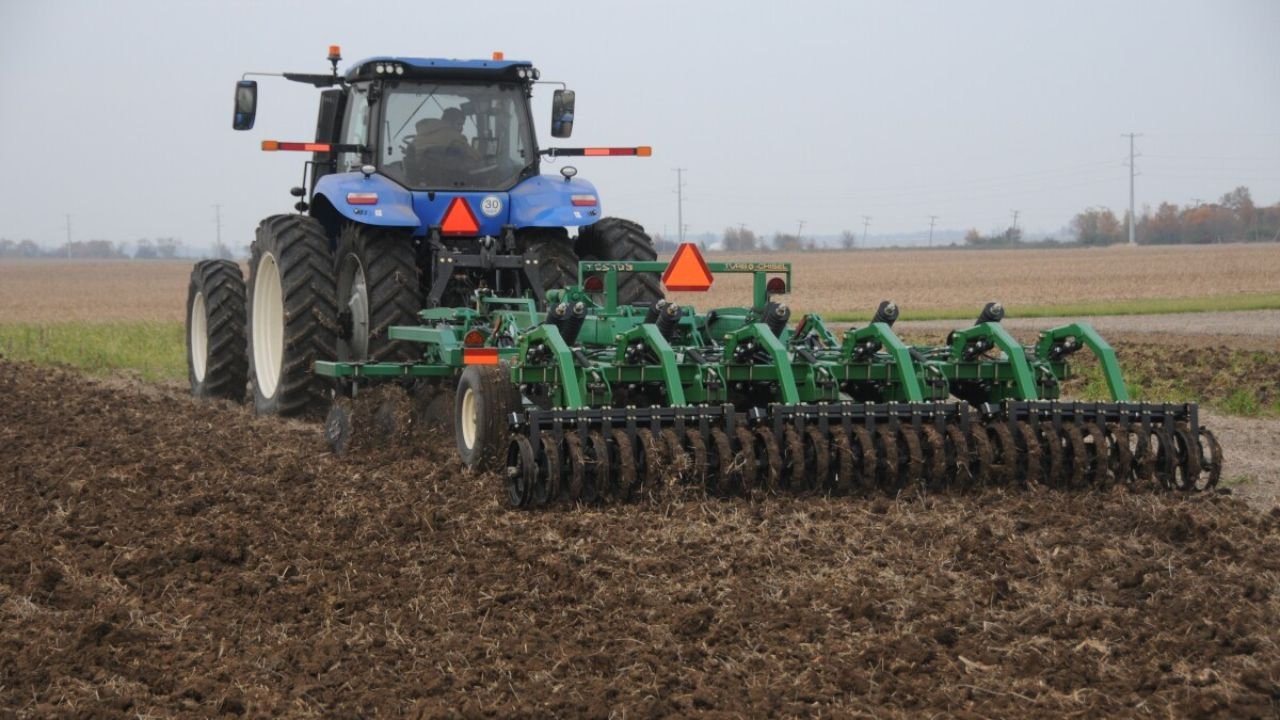
Farmers frequently reach out to Ken Ferrie, a well-known Farm Journal Field Agronomist, during the fall season with questions about correctly adjusting their tillage tools. Most farmers want to know the ideal depth, the best operating conditions, and when to use specific cutters or shanks.
However, Ferrie emphasizes that before he can offer any advice, growers must first clarify which tillage system they are using. In central Illinois, producers typically rely on conventional vertical tillage or conventional horizontal tillage.
Types of Tillage Systems
Conventional Vertical Tillage
In this approach, farmers usually run a disk ripper or chisel plow during the fall. The soil is then finished the next spring using a vertical harrow before planting begins. This system focuses on slicing residue and achieving controlled soil disturbance.
Conventional Horizontal Tillage
With horizontal tillage, the seedbed is primarily prepared in the spring. Tools such as a soil finisher, disk field cultivator, or high-speed disk are used to create the final soil surface. While the fall tillage depth still matters, Ferrie explains that the speed at which the tool is pulled and the residue coverage achieved are often more important.
Ferrie notes that many farmers simply find a balance between speed, horsepower, and front-end cutter performance to manage residue effectively. This method works well because they will refine the seedbed later in the spring.
Adjusting a Hybrid Tillage Tool
In a recent demonstration, Ferrie shows how to correctly set up a hybrid tillage tool that is capable of performing both horizontal and vertical passes.
Achieving Proper Soil Shatter
Why Full-Width Shatter Matters
For farms where the fall pass serves as the primary tillage, Ferrie stresses the importance of achieving full-width shatter. This means the soil needs to be fractured evenly from one shank to the next.
He explains that although the tool may appear properly set from a distance—leaving the soil level and the residue evenly spread—the real results are only visible when you inspect the knife tracks directly.
Comparing Shatter in Different Systems
Horizontal Tillage Results
After completing a horizontal tillage pass, digging behind the shanks often reveals a humped soil bottom and solid berms. Ferrie says these issues can typically be managed in the spring using a disk or soil finisher to smooth out the berms before planting.
Vertical Tillage Results
Vertical tillage, however, demands a more complete soil fracture. Every column of soil between the knife tracks must be broken apart to prevent planter chatter and field bounce during spring operations.
Ferrie demonstrates that in a vertical tillage setup, he increases his depth by 1 to 1.5 inches to ensure those columns are fully fractured. This creates a loose, broken-up soil structure that will easily blend into a smooth seedbed during spring tillage.