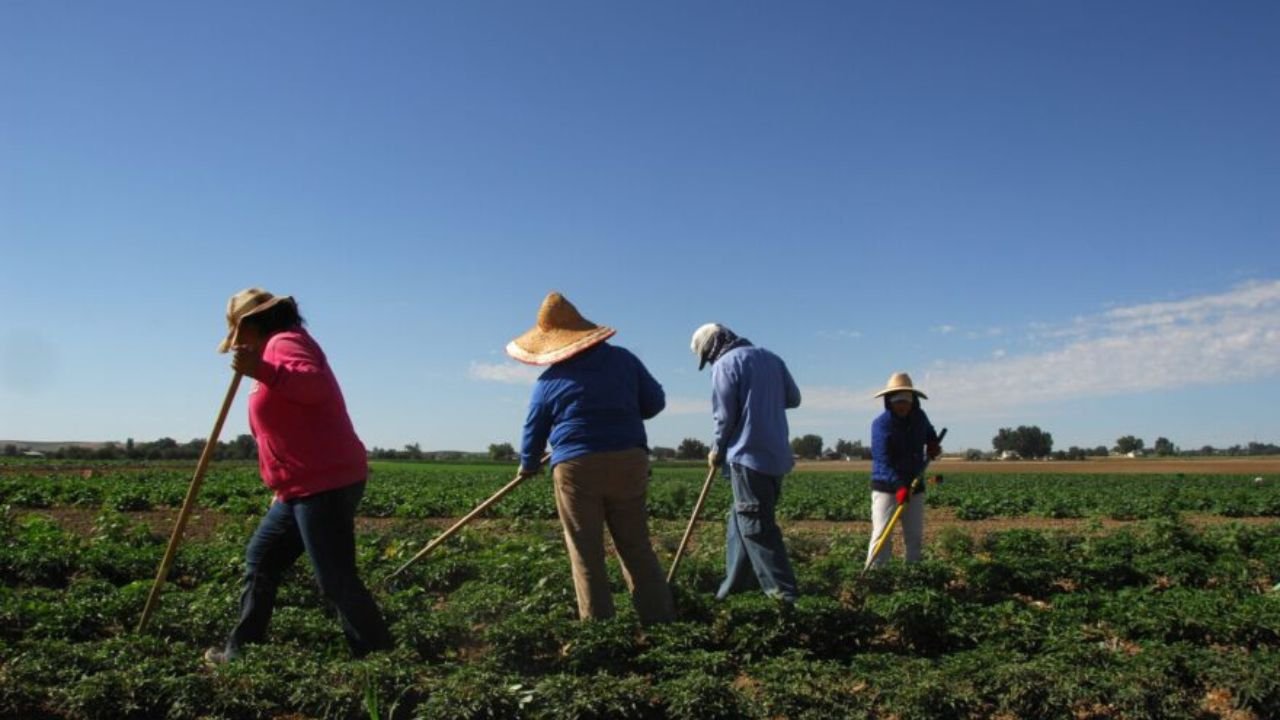
Leaders in Idaho’s agriculture industry stress that migrant workers are essential to keeping farms operating, and without meaningful immigration reform, the state’s agricultural economy could face serious setbacks. This was the central message at a recent public forum hosted by The City Club of Idaho Falls, where local experts emphasized the urgent need for change.
The event took place at the Bennion Student Union Building on Idaho State University’s Idaho Falls campus. Congressman Mike Simpson, the keynote speaker, couldn’t attend in person because of the House vote related to the federal government shutdown. Instead, he shared a prerecorded message outlining his support for long-awaited immigration legislation.
The Farm Workforce Modernization Act: A Key Proposal
Background and Purpose of the Act
In his video remarks, Congressman Simpson highlighted the Farm Workforce Modernization Act, a proposal he has strongly supported. The bill aims to revise the Immigration and Nationality Act by establishing updated guidelines for nonimmigrant agricultural laborers, particularly those using the H-2A visa program.
Approved in 1986, the current H-2A system provides seasonal migrant workers with temporary legal status and the chance to obtain a permanent green card, provided they maintain a clean criminal record and pass mandatory background checks.
Although the bill passed the House twice in previous years, it has repeatedly stalled in the Senate. Reintroduced earlier this year, it still awaits a vote.
Simpson’s Optimism
Despite four years of gridlock, Simpson expressed confidence that the bill has a stronger chance of passing now.
“I think we have the best chance that we have had to pass it right now under this administration,” Simpson said. “It’s one of my top priorities … to get this done.”
Challenges with the Current H-2A Visa Program
High Costs and Regulatory Burdens
At the forum, Zak Miller, CEO of the Idaho Farm Bureau Federation, explained that while the H-2A visa system is crucial for U.S. agriculture, it is also expensive, overly complex, and difficult for Idaho farmers to work with.
“It’s critical to U.S. agriculture … but it’s a bad program and it’s not serving Idaho well,” Miller noted.
Idaho’s Workforce Reality
Forum moderator Karole Honas shared data from the Idaho Department of Labor, revealing that 40% of Idaho’s workforce is undocumented. Miller also referenced a study showing that undocumented workers often have lower criminal rates than the average U.S. citizen.
At the same time, he acknowledged that many Idaho farmers support efforts to tighten border security. However, aggressive enforcement and the threat of deportation create fear among legal migrant workers and contribute to workforce shortages.
“You get absenteeism up and down the community when there’s a threat,” Miller said. “Ag is dissatisfied with the current state of labor… We want a real solution.”
Migrant Workers: Essential to Idaho Dairies and Farms
Impact on Food Supply
Rick Naerebout, CEO of the Idaho Dairymen’s Association, underscored the essential role migrant labor plays in Idaho’s food production.
“We can’t feed ourselves as a country if you eliminate this workforce,” Naerebout emphasized.
Idaho’s Agricultural Footprint
According to Miller’s presentation, Idaho has the fifth-largest agricultural economy in the United States, supporting:
377,343 jobs
Over $23 billion in wages
Most of these jobs—more than 231,000 positions—are concentrated in eastern Idaho, highlighting the region’s reliance on agriculture.
Push for Legislative Action
Support from Idaho Leaders
Although the Farm Workforce Modernization Act has faced Senate delays, Naerebout praised Idaho Senator Mike Crapo for his persistent efforts to advance the bill.
Call for Public Involvement
Both Miller and Naerebout stressed that citizen involvement is crucial. They encouraged Idahoans to communicate with local, state, and federal lawmakers to advocate for meaningful immigration reform.
“Agriculture is still the backbone of our economy,” Naerebout said. “Our communities don’t survive if we can’t figure out how to solve this problem.”