
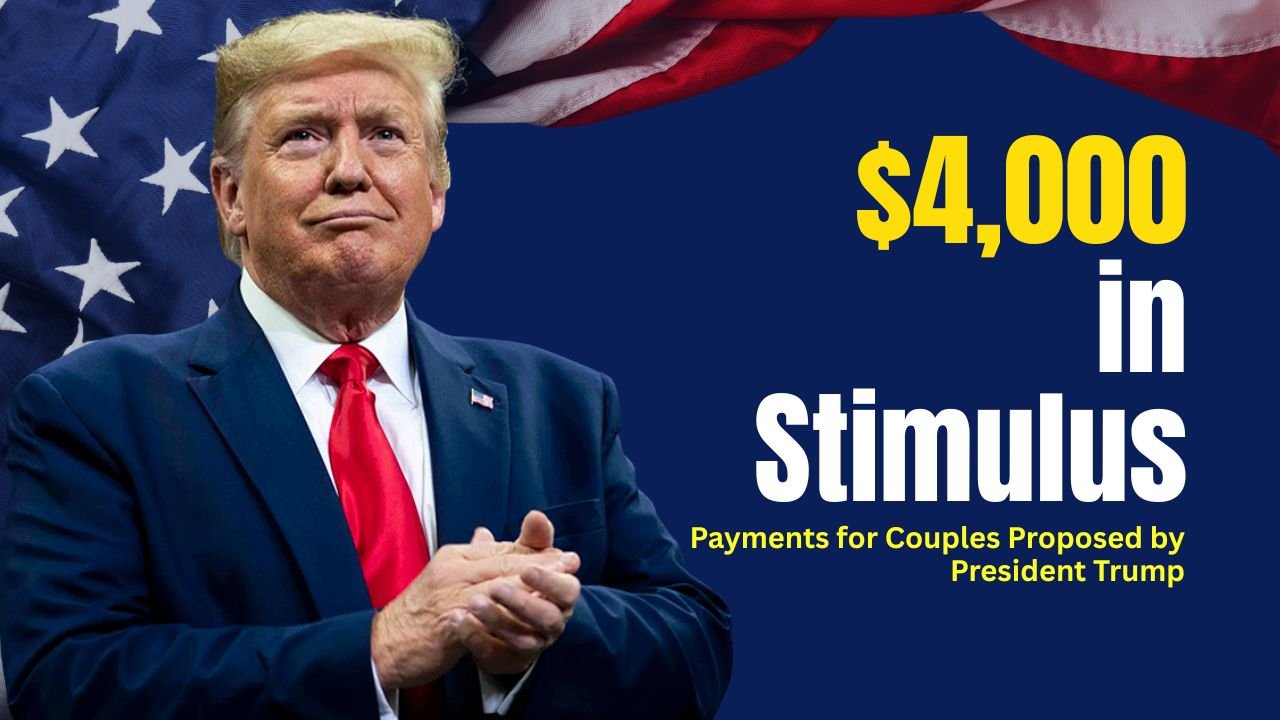
Former President Donald Trump has introduced a fresh proposal aimed at offering direct financial relief to millions of Americans. The idea centers on sending economic stimulus checks to lower- and middle-income taxpayers—reviving a national debate similar to the discussion around the previously mentioned but never-implemented $5,000 DOGE dividends. This renewed plan comes as many households continue to struggle with high living costs, inflation pressures, and ongoing financial uncertainty.
Stimulus Plan Funded Through Tariff Revenue
Using Tariffs as a Source of Cash
The proposal suggests using tariff revenues generated under U.S. trade policies to fund these new payments. According to the Trump team, the stimulus checks would amount to “at least $2,000 per person”, issued to individuals earning below a designated income threshold. The concept aims to redirect a portion of tariffs—effectively taxes collected on imported goods—back into the pockets of American taxpayers.
Proposed Payment Amounts: Up to $4,000 for Couples
Income Limits and Benefit Distribution
Treasury Secretary Scott Bessent stated that the proposed income cap is $100,000 for single filers. Under this model, married couples meeting the same income criteria may receive up to $4,000 in total stimulus support.
What About Dependents?
One key detail remains unclear: whether children and other dependents would qualify for additional payments. Earlier stimulus rounds under previous administrations provided extra funds for dependents, which could influence how this new plan is shaped.
Legislative Status: Concept Only, No Bill Yet
Early Stage With Many Hurdles
Despite rising public interest, the concept remains in the idea phase, with no official bill introduced in Congress. Passing a stimulus package requires bipartisan agreement—something that has proven challenging in recent years.
Comparing With Previous Proposals
Earlier in the year, Senator Josh Hawley proposed $600 reimbursement checks, a significantly smaller amount than Trump’s current $2,000-per-person plan. Historically, stimulus ideas often evolve as they move through Congress, meaning the final version—if passed—could look different from the initial proposal.
Financial Reality Check: Revenue vs. Cost
Estimated Cost of the Program
A major obstacle is the massive cost of the proposed checks. The Tax Foundation estimates that nearly 150 million Americans would qualify, resulting in a projected cost of around $300 billion. This number could rise if dependents are added.
Tariff Revenues Are Not Enough
So far, tariffs have generated $120 billion, and fiscal projections show the amount may rise to $216 billion by 2026. However, even at the higher figure, tariff revenue alone cannot fully cover the total cost of large-scale stimulus payments.
Legal Challenges: Supreme Court Review
Presidential Authority in Question
Another complication is the legal debate over whether the President has full authority to impose certain tariffs without direct congressional authorization. The Supreme Court is currently examining this issue, and its eventual ruling could directly affect the funding mechanism Trump is relying on.
Outlook: Will the $2,000 Checks Become Reality?
Uncertain Path Ahead
At this stage, the proposal remains far from becoming law. While the idea has sparked discussion across party lines, no formal bipartisan agreement has been reached. For now, Americans will have to wait and see if Congress can come together to approve a program that delivers $2,000 stimulus checks funded by tariff revenue.
The upcoming U.S. Minimum Wage Changes for 2025: Revised Rates and State-by-State Details highlight how workers across the country will see updated pay standards based on local economic conditions. These changes aim to ensure fairer wages, reduce income gaps, and help employees keep up with rising living costs. As the U.S. Minimum Wage Changes for 2025: Revised Rates and State-by-State Details roll out, employers and workers will need to review new state-specific rules to understand how the updated rates affect jobs, budgets, and overall financial planning.
Conclusion
In conclusion, Trump’s proposal for $2,000 stimulus checks has sparked renewed debate on economic relief, government spending, and tariff-based funding. While the plan presents a bold approach to easing financial strain for millions, significant fiscal, legal, and legislative hurdles stand in the way. Whether these payments ever reach taxpayers depends entirely on Congressional action, projected tariff revenues, and upcoming Supreme Court decisions. Until then, the idea remains a promising yet uncertain economic proposal.
FAQs
1. Who would qualify for the proposed $2,000 stimulus checks?
Individuals earning under $100,000 and married couples below the same threshold may qualify, though final eligibility rules are not confirmed.
2. Will dependents receive additional stimulus payments?
The proposal has not clarified benefits for dependents, but past stimulus programs offer precedent for their potential inclusion.
3. How would the federal government fund these stimulus checks?
The plan relies on tariff revenue, though current collections fall short of the estimated $300 billion needed.