
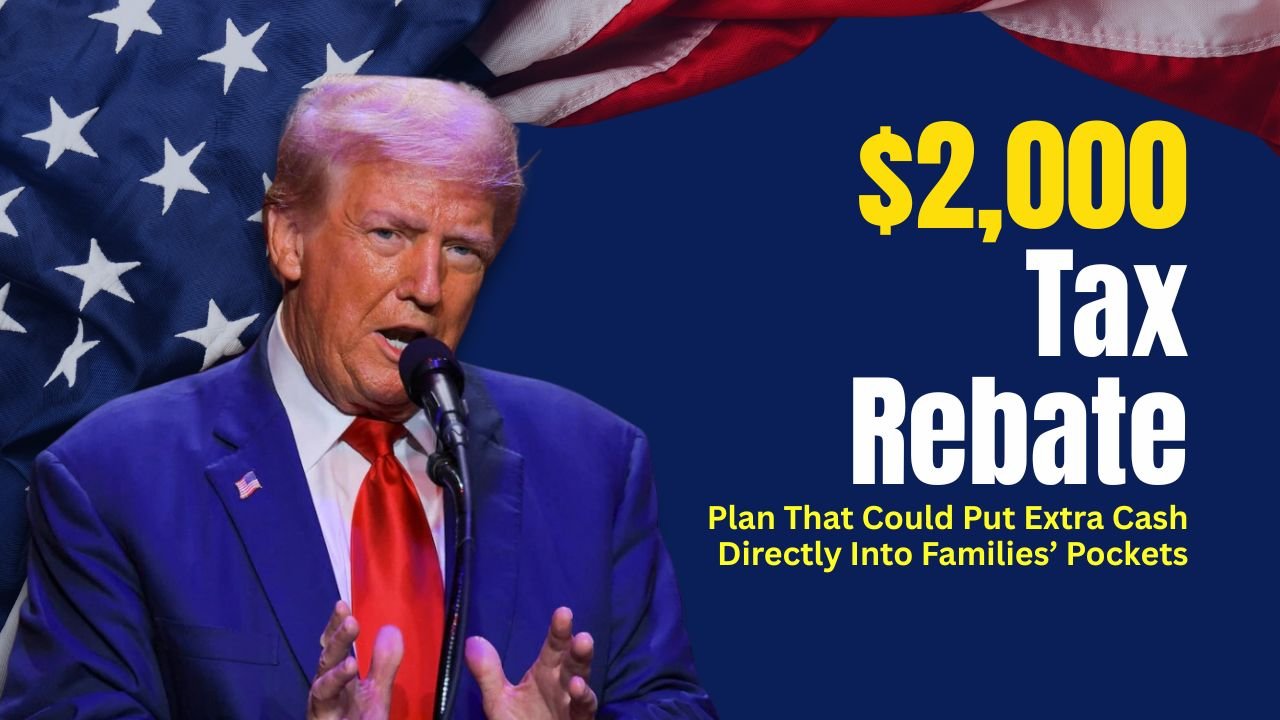
Imagine getting a $2,000 tax rebate check in your mailbox—money you could put toward rising household bills, groceries, or simply saving for the future. That’s the concept behind a new tariff-funded rebate proposal, which aims to deliver direct financial relief to millions of Americans using money collected from U.S. import tariffs. Supporters argue that this “tariff dividend” could help offset the growing cost of living that families across the country are struggling with.
Understanding the Tariff Rebate Proposal
What Is the Purpose of the Rebate?
The central idea is simple: return a portion of federal tariff revenue to American households in the form of direct rebate checks. The program is being framed as a way to relieve financial pressure by sharing the gains from import taxes with working- and middle-class families.
Who Could Receive This $2,000 Payment
Income-Based Eligibility
The proposal targets moderate- and middle-income earners, though no final income thresholds have been set. Early estimates suggest:
- Adults earning up to $100,000 annually may qualify
- Roughly 150 million people could fall within the eligible range
However, expanding the program to every American—including children—would cost nearly $600 billion, making broad eligibility financially unrealistic under current projections.
Where Would the Funding Come From?
The Role of U.S. Tariff Revenue
The plan depends entirely on tariff revenue generated by taxes on imported goods. In the most recent year:
- Tariffs generated nearly $195 billion
- Supporters believe revenue could rise to $200–$300 billion each year under revised policies
Economic Concerns
Economists warn that tariff revenue projections may be overly optimistic. They argue that:
- For every dollar earned from tariffs, part of that gain is lost through reduced spending and lower tax revenues
- Funding even a limited rebate program could consume nearly all tariff revenue
- Additional funding might still be needed
When Could This Proposal Take Effect?
Timeline and Legislative Hurdles
Optimistic projections suggest mid-2026 as the earliest possible payment timeline. But several major obstacles stand in the way:
1. Congressional Approval
A new law must pass Congress—something that has blocked similar ideas before.
2. Supreme Court Review
The Supreme Court is currently analyzing whether certain tariffs are constitutional.
A negative ruling could wipe out the entire funding source.
3. Political Resistance
Some lawmakers believe tariff revenue should be used to reduce national debt, not distribute rebates.
The American Worker Rebate Act of 2025
Overview of the Proposed Bill
The American Worker Rebate Act of 2025, sponsored by Senator Josh Hawley (R-MO), was introduced on July 28, 2025. This bill seeks to convert revenue from tariffs—largely imposed during the Trump administration—into direct rebate payments for millions of Americans.
Inspiration Behind the Bill
The idea came shortly after comments from former President Donald Trump in July 2025, suggesting Americans might receive a “small rebate” funded by record tariff revenue. This encouraged Senator Hawley to introduce formal legislation.
Key Features of the Rebate Proposal
Record Tariff Revenues
- June 2025 alone produced nearly $30 billion in tariff revenue
- Annual projections range between $150 billion and $300 billion
These funds would be directly redistributed to households to help counteract increasing costs of living and any price hikes caused by tariffs.
Main Provisions of the Bill (S.2475 – 119th Congress)
Minimum Rebate Amount
- $600 per adult
- $600 per dependent child
- A family of four would receive at least $2,400
Potential for Larger Payments
If tariffs generate more revenue than expected, rebate amounts could increase automatically.
Eligibility and Phase-Out Rules
- Similar to the 2020 stimulus payments
- Income phase-out begins at:
- $150,000 for married couples filing jointly
- $75,000 for single filers
- Excludes:
- Nonresidents
- Estates and trusts
- Dependents claimed on another person’s tax return
Method of Payment
Benefits will be issued as a refundable advance tax credit, sent via:
- Direct deposit
- Physical check
The process closely mirrors the CARES Act stimulus system.
Public Awareness Campaign
The Treasury Department would run a nationwide outreach initiative to notify eligible individuals—especially non-filers.
Exclusive Funding Source
All rebates would be financed solely through tariff revenue, avoiding new taxes or increases in federal debt.
Conclusion
The proposed $2,000 tariff-funded rebate and the American Worker Rebate Act of 2025 represent a bold effort to redistribute tariff revenue directly to American households. While the idea offers potential financial relief during a period of rising living costs, major challenges—including legal rulings, political disagreements, and uncertain revenue forecasts—could determine whether the plan becomes reality. Still, the conversation highlights the ongoing push for new ways to support working-class families through federal policy.
FAQs
1. When could Americans receive the rebate checks?
If approved, the earliest estimated timeline is mid-2026, though legislative and legal hurdles could cause delays.
2. How much would a family receive under this proposal?
A family of four could receive at least $2,400, with the possibility of more if tariff revenue exceeds expectations.
3. Is everyone eligible for the rebate?
No. The program focuses on low- to middle-income households, with phase-outs beginning at $75,000 for individuals and $150,000 for joint filers.